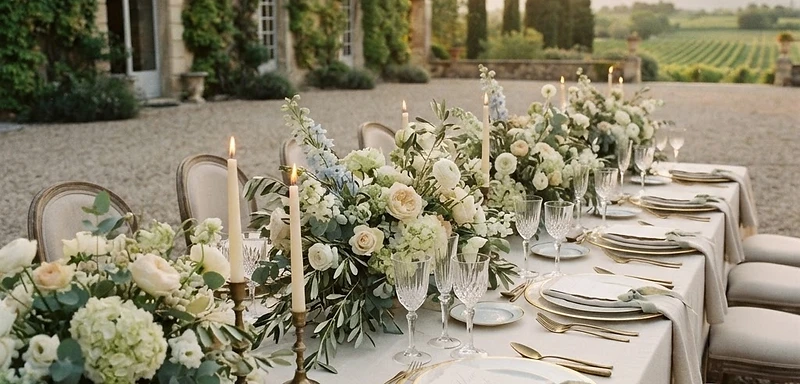

The question of children is the question that generates more anxious email, more offended aunties, and more last-minute budget revisions than any other in the planning of a wedding. It is not, however, a question without an answer. It is a question with a correct answer for your specific event, and that answer, once decided, must be communicated with absolute clarity and zero apology.
The decision is binary, but the cut-off need not be. You may invite all children, no children, or children above a certain age. The most common threshold is twelve months — below which an infant is considered lap-held and exempt from a head count, above which a seat and a plate are expected. Some couples draw the line at five years old, or at the children of immediate family only. Each is defensible. What is indefensible is inviting some guests' children and not others' without a clear, articulated rule. Inconsistency in this matter is not kindness; it is an invitation to grievance.
If you are excluding children, the wording goes on the invitation envelope. The names of those invited appear on the inner envelope. If Mr and Mrs Harrington are invited and their children are not, the envelope reads "Mr and Mrs Harrington" — not "The Harrington Family." No further explanation is required, and none should be offered. If a parent asks, the answer is: "We are having an adults-only celebration." Full stop. Do not say "We wish we could include them" unless you actually do, in which case include them.
If you are including children, the planning changes. Children are not small adults. They require a separate menu, a separate seating strategy, and a separate entertainment plan. A children's table is acceptable for those over seven; below that, children should be seated with their parents. The children's menu should be served promptly — hungry children are restless children, and restless children are audible children. A plate of pasta, chicken tenders, or a simple fruit assortment, served before the main course arrives, will save the room forty minutes of escalating noise.
Entertainment for children is not optional; it is hospitality. A corner with colouring books, a hired sitter for the youngest, a scavenger hunt for the older ones — these are not extravagances. They are the infrastructure that allows parents to enjoy the event and children to tolerate it. A wedding that invites children and makes no provision for them has not been generous. It has been negligent.
Children in the wedding party — the flower girls and page boys — are a separate protocol entirely. They walk in the processional before the bride and after the attendants, paired or single depending on their number. They are seated with their parents during the ceremony, not at the front. They are not expected to stand for the duration. If a child freezes at the top of the aisle — and many will — the assigned adult (not the bride, never the bride) walks forward, collects the child, and accompanies them down. The child is not embarrassed. The child is four.
One final note on nursing infants. A mother nursing an infant is exempt from every seating constraint, every timeline, and every dress code discussion. She is accommodated, not managed. A quiet room with a monitor broadcasting the ceremony is the minimum provision. Anything less is a failure of the host, not of the mother.
The rule, in sum: decide, communicate, and provide for the decision you have made. Ambiguity is the only true error.