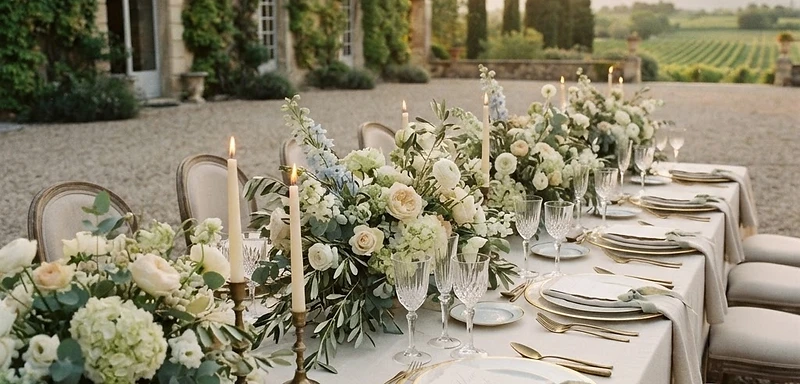
There is a phase, usually around the sixth month of planning, when every bride develops a fixation on a single flower. It is almost always the calla lily. Before that it was the peony. Before that, the ranunculus. Before that, the hydrangea, and we do not speak of the hydrangea years.
I have nothing against the calla lily. It is a handsome flower, architectural, clean-lined, slightly severe. It looks well in a tall vase and better in a tall hand. What I object to is the idea that a flower constitutes a vision.
A flower is a material. A vision is a relationship between materials, light, scale, and the room they occupy. When a bride tells me her wedding is "calla lilies and white," I hear that she has not yet decided what she wants. She has chosen an ingredient and mistaken it for a meal.
The question I ask, when a bride arrives with her flower fixation, is this: what do you want the room to feel like when you walk into it? Not look like. Feel like. The answer is never a flower. The answer is calm, or drama, or intimacy, or abundance, or the particular hush of a room that has been dressed with restraint. Once we know the feeling, the flowers follow.
A room that should feel calm does not want calla lilies. It wants something softer — sweet pea, cosmos, a single variety of garden rose in a pale tone, arranged loosely so that each stem has room to breathe. A room that should feel dramatic wants amaryllis, or dark dahlia, or lilies arranged en masse with their stamens removed. A room that should feel abundant wants a mixture, but a considered mixture, not everything from the market stall poured into a vase.
The flower is the last decision, not the first. Begin with the feeling, work backward to the palette, and let the florist suggest the bloom. You will spend less, look more considered, and avoid the particular sadness of a wedding that has been built around a single stem because no one asked the better question.